
Enhancing Preparedness Against ICT Threats in the Financial Sector
On 17 January 2025, the Regulation (EU) 2022/2554 of the European Parliament and of the Council of 14 December 2022 on digital operational resilience for the financial sector (DORA) will begin to apply, which will affect the majority of companies in the financial sector. Today, payment service providers, credit institutions and investment firms are covered by the EBA ICT guideline EBA/GL/2019/04 while insurance and reinsurance companies are covered by EIOPA's ICT guideline EIOPA-BoS-20/600. DORA unifies the regulatory framework for ICT security, and as a result, actors whose activities were not previously covered by the framework (e.g. companies dealing with cryptocurrencies and cloud services) will also comply with DORA.
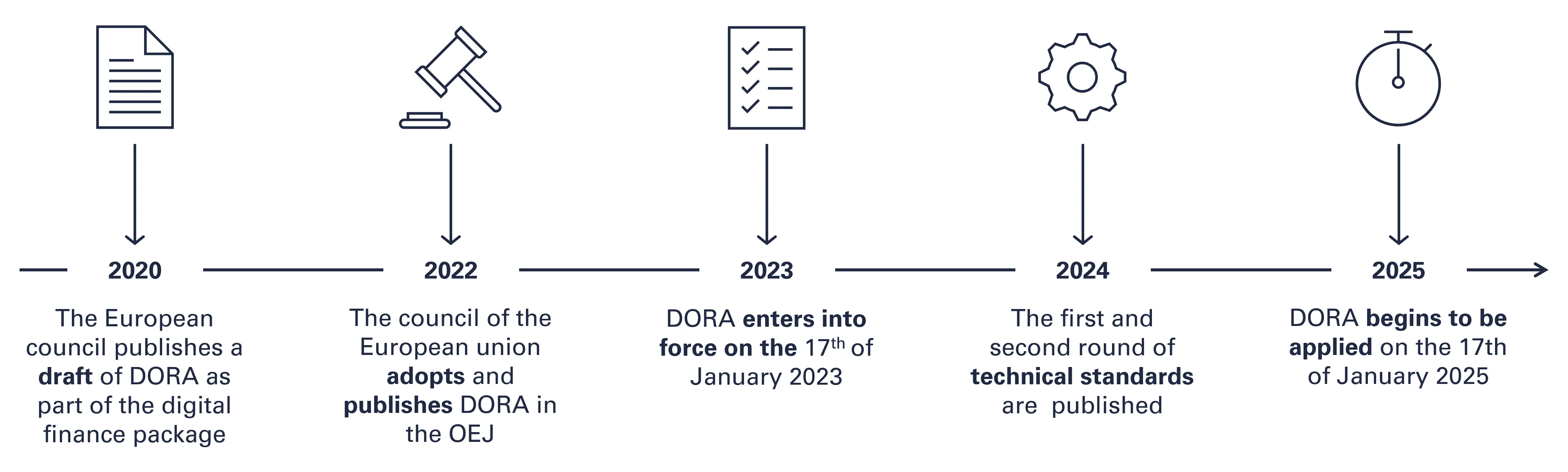
The overall aim of DORA is to strengthen preparedness against ICT threats in the financial sector, with a focus on minimising disruptions to the most critical financial systems and ensuring their continuity and availability. To achieve this, DORA requires financial firms to develop carefully crafted business continuity and crisis plans, clearly allocate responsibilities within the organisation and establish clear lines of communication. In addition, DORA emphasises the importance of managing third-party risks, particularly with regard to the risk of relying on external systems and the potential lack of transparency.
Published ITSs, RTSs and Guidelines
The table below lists the published ITSs, RTSs and guidelines that complement DORA. A number of these are finalised and already published in the Official Journal, while the rest are either awaiting translation into other EU languages or awaiting approval from the European Commission. Whatever the status, you can consult the current versions and plan how your organisation can act in line with the new rules.
Next Steps
With DORA coming into force soon, now is the time to consider how your business may be affected. At NFC, we can support you with questions about how the introduction of DORA will affect your business and what changes you need to make to fulfil the new requirements. Read more about our regulatory advice services or contact us below to find out more!