Introduction
As a growing bank operating across multiple markets faced heightened regulatory requirements and an increasingly complex balance sheet, modernising its risk management and financial reporting became imperative. The challenge lay in strengthening the oversight of liquidity risk and interest rate risk in the banking book (IRRBB), while simultaneously integrating fragmented data sources and processes under tight deadlines.
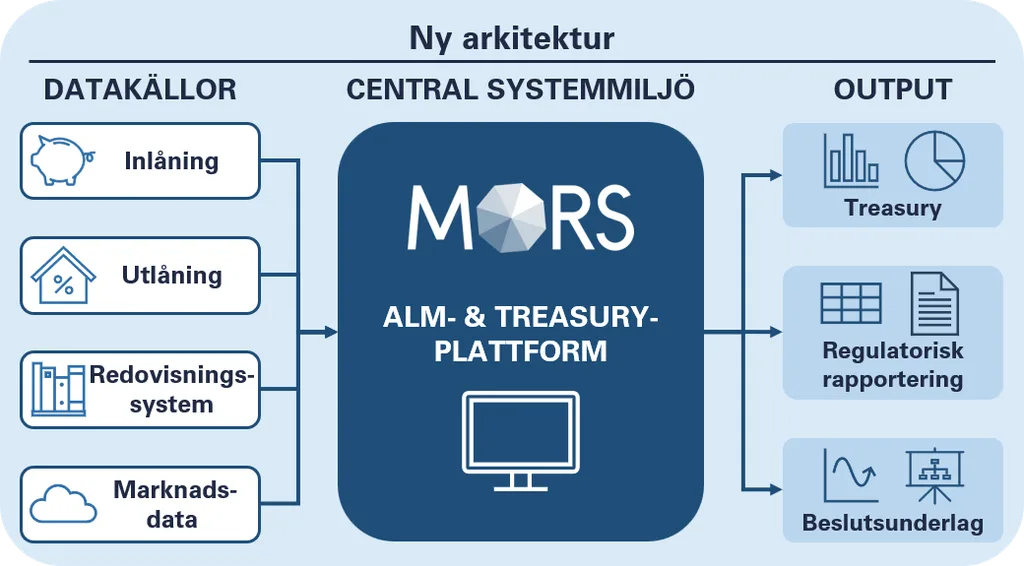
To establish a future-proof infrastructure and meet supervisory expectations, the bank implemented the Asset Liability Management (ALM) and Treasury system MORS. NFC was engaged to support the transformation, providing a combination of project management and deep specialist expertise in risk modelling, capital adequacy, and regulatory reporting.

NFC's Contribution in Brief
Background
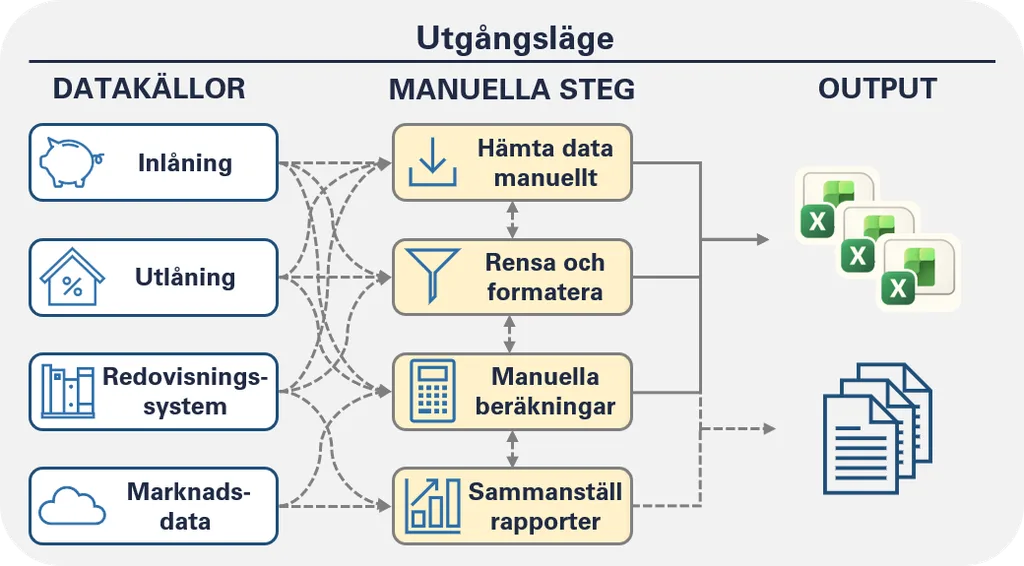
Previously, elements of the bank’s Treasury and ALM operations relied on manual, spreadsheet-based models. This entailed time-consuming data collection, key-person dependencies, and heightened operational risk as business volumes expanded.
To support the bank’s continued growth, a centralised and scalable platform was required, offering a high degree of automation and full auditability. MORS was selected due to its capability to consolidate IRRBB analysis, liquidity risk, and cash flow calculations into a single, unified workflow. Combining Treasury (TMS) and ALM within a shared platform also paved the way for more integrated processes and reduced reliance on manual tasks.
Critical challenges in the project:
- Data Harmonisation: Extracting and cleansing data from multiple underlying core and product systems to establish a unified database structure.
- Standardisation of Risk Models: Consolidating and aligning calculation methodologies into a coherent and robust framework within MORS.
- Regulatory Time Constraints: Deploying the solution and ensuring that the upcoming supervisory reporting cycle could be delivered on time and with high quality.
Execution
NFC stepped in early in the project to lead the implementation efforts and provide specialist expertise across key risk areas. The project was executed iteratively in close collaboration with the bank’s Treasury, Risk, and IT functions.
Within IRRBB, the work commenced with a thorough review and quality assurance of the bank’s calculation methodologies. These served as a benchmark during the MORS configuration, where NFC was responsible for plausibility assessments, calibration of behavioural assumptions, and quality assurance of system outputs. In parallel, full alignment with the latest EBA guidelines and reporting requirements was ensured.
The work on liquidity risk (including LCR and ALMM) focused on regulatory interpretation, cash flow mapping, and configuring the underlying calculation logic in MORS. A key deliverable was establishing automated categorisation of deposits and funding sources to create a stable and transparent data foundation.
Beyond the implementation itself, NFC’s consultants acted as system specialists and superusers, ensuring stable day-to-day operations within the Treasury function throughout the transformation phase.
Outcome
The project resulted in a modern and fully integrated platform for the bank's risk management and reporting:

Are you facing similar challenges or planning to strengthen your work in Treasury and ALM? Read more about our regulatory reporting services or contact us for a dialogue about how we can support your business.