Introduction
When a newly established Swedish company faced the task of applying for authorisation as a payment institution, a comprehensive and tailored application to the Swedish Financial Supervisory Authority (Finansinspektionen) was required. The challenge lay in building the operations and implementing a complex regulatory framework from the ground up under intense time pressure ahead of the planned launch.
To establish a robust foundation for the planned operations and meet supervisory expectations, NFC was engaged to support the application process. NFC provided a combination of regulatory advisory and deep specialist expertise across risk management, capital adequacy, as well as internal governance and control.

NFC's Contribution in Brief
Background
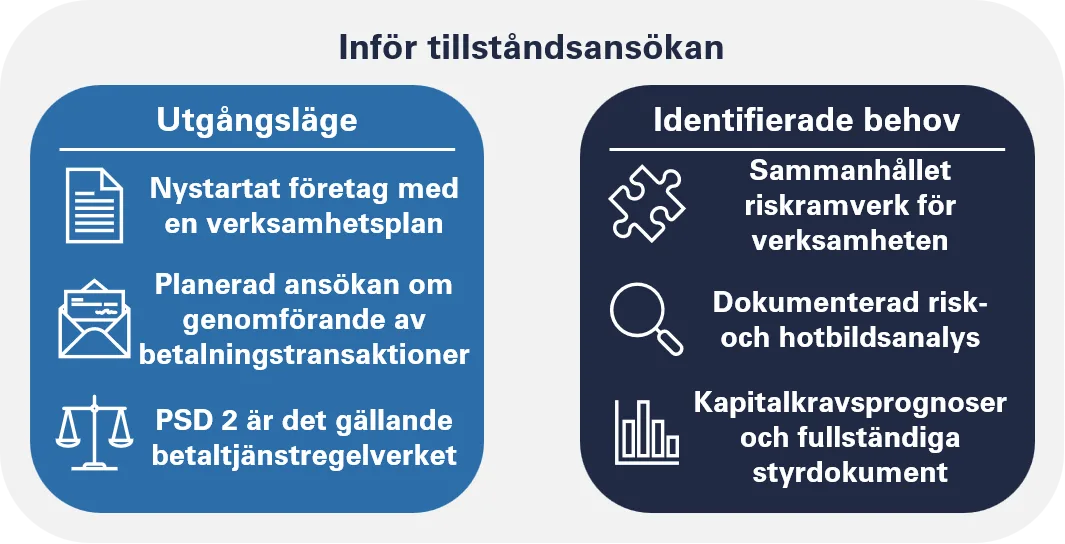
The payment services market is strictly regulated under frameworks such as PSD 2. Consequently, start-up entities are scrutinised against comprehensive internal governance and control requirements from the very outset, during the establishment and licensing phase. At the time, the company lacked the internal resources and specialised expertise required to interpret and implement the applicable regulations.
To not only secure authorisation from the Swedish Financial Supervisory Authority, but also establish the prerequisites for stable operations post-authorisation, a partner was needed who could translate regulatory requirements into practical, business-oriented processes.
Critical challenges of the engagement:
- Regulatory Complexity: Interpreting the regulations and translating internal governance and control requirements into practical processes tailored to the company’s planned business model.
- Dual Objective: Establishing operational activities from the ground up while simultaneously documenting a comprehensive risk framework ahead of the application process.
- Completeness: Ensuring that all documentation was formulated in accordance with the established practice and supervisory expectations.
Execution
NFC worked in close collaboration with the company’s executive management throughout the entire process, using the business plan and the planned business model as a foundation. The engagement was conducted iteratively, where initial drafts of governance documents, analyses, and financial projections were progressively refined through ongoing dialogue and feedback.
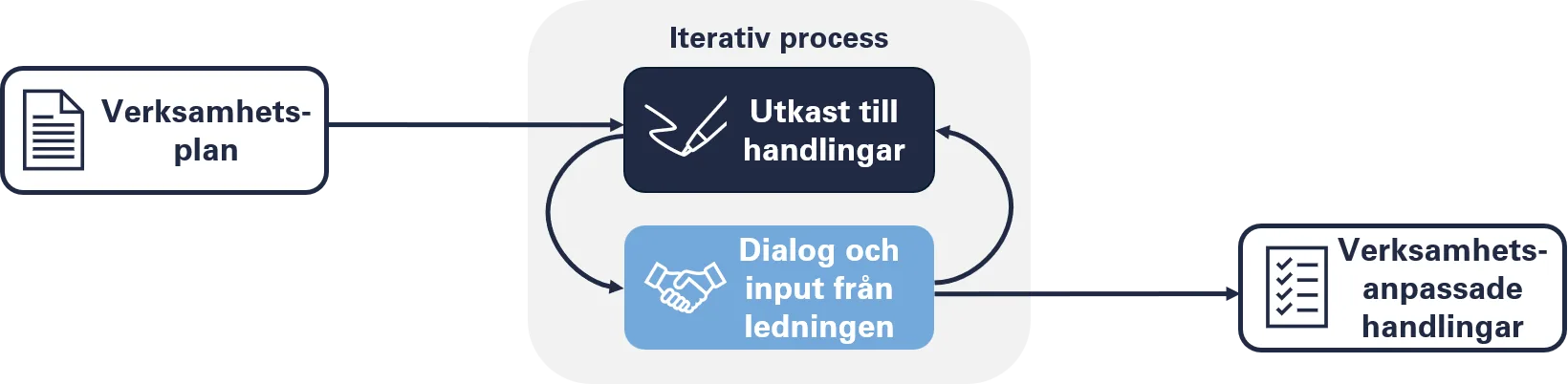
A central component of the engagement was preparing the documentation required as part of the authorisation process. This included, among other things, financial forecasts for the first three financial years, projections of the own funds and capital requirements, and a risk management policy in accordance with applicable regulations. The scope of work also encompassed conducting a risk assessment and threat analysis, as well as business continuity planning, with a focus on identifying and managing the risks associated with the planned operations.
In parallel, it was ensured that risk management and internal governance were integrated into the company’s operational processes. This meant that the framework was designed not merely to satisfy formal requirements for the application process, but also to serve as a practical, scalable foundation for operations once authorised.
Outcome
The collaboration resulted in a comprehensive, well-substantiated application and an established framework for the company’s ongoing risk management:
Are you preparing for a similar application for a new or extended licence, or seeking to strengthen your risk management and internal governance? Read more about our licence application services or contact us to discuss how we can support you from the initial application through to fully approved operations.